
Case study · Signal-based outbound
Signal-based outbound in Clay: 179% more meetings booked
We rebuilt our own outbound in Clay so that nothing gets sequenced unless the system finds a real reason to talk to the account. Research, messaging and a launch review all run in one connected workflow.
Built for: CMM's own prospecting
- +179%Meetings booked in 90 days
- +50%Meeting-booking rate
- 3Agents: research, copy, review
01 · The situation
What needed to change
An industry or headcount match is only a starting point. Lists built that way produce messages that could be sent to anyone, and buyers can tell.
We wanted every campaign to start from something happening inside the account, and to connect that development to a specific problem we can solve.
02 · What we built
The workflow, step by step
- 01
Organize target accounts
Accounts live in Clay Audiences, so research, qualification and campaign prep all read from the same list instead of exported copies.
- 02
Research the account
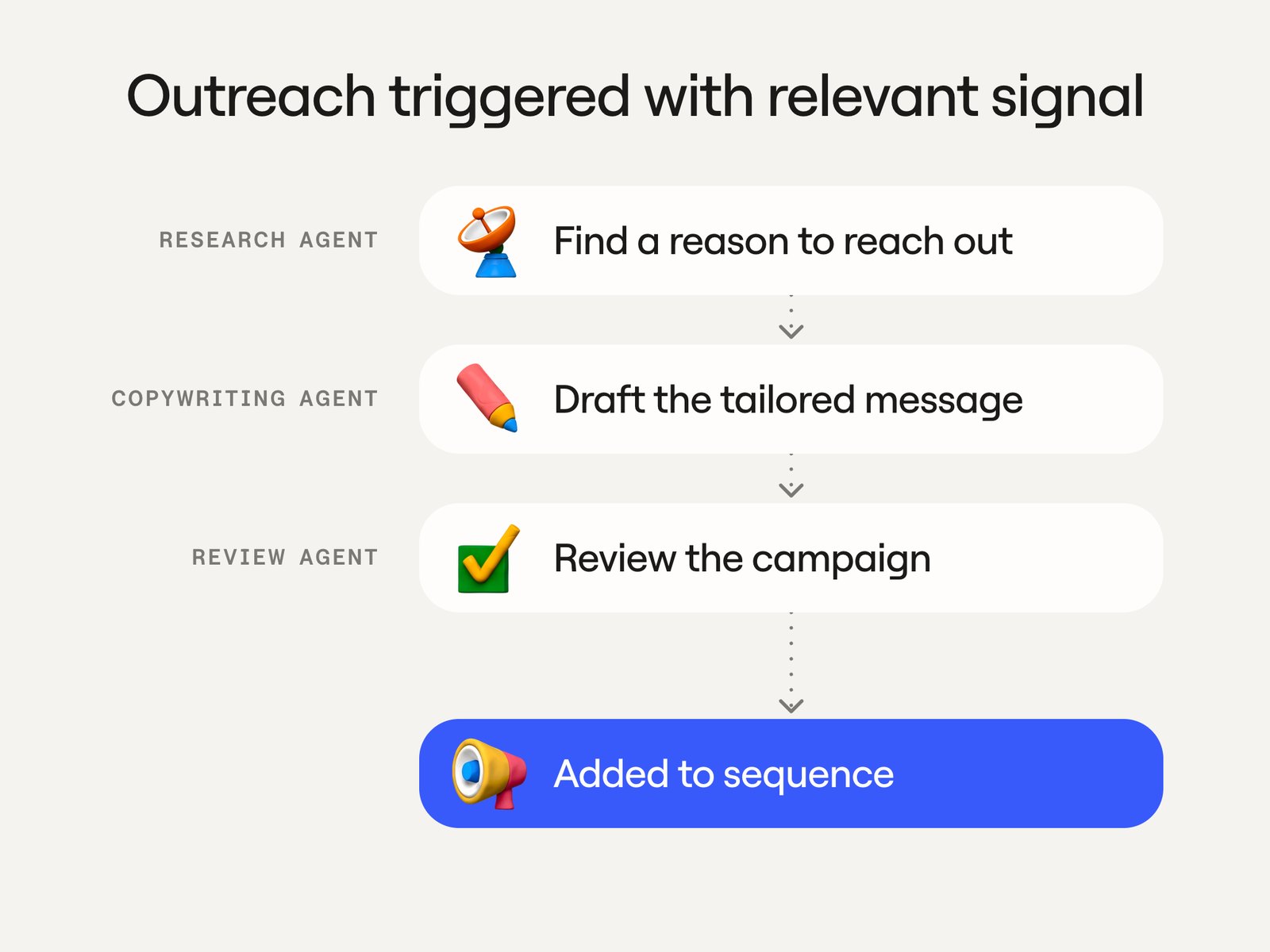
A research agent looks for a development that connects to our offer. In one run it found a company using agents to assemble internal morning briefs, a clear opening for source-backed account research.
- 03
Draft from the finding
A copywriting agent turns that finding, plus our offer context, into a specific proposal. For the morning-brief account it suggested running five accounts through Clay so the prospect could compare the output with their own.
- 04
Review before launch
A third agent reads the research and the proposed campaign and decides whether the reason is strong enough. Weak reasons stop here instead of reaching an inbox.
- 05
Hand off to the sequence
Approved campaigns land as drafts in Clay Sequencer. Reusable skills define how each agent works; Josh sets the method and reviews the output.
03 · The result
What changed
Meetings booked rose 179% in 90 days, and the share of outreach that turned into a meeting rose 50%.
The review step matters as much as the writing step. Fewer campaigns launch, and the ones that do have a reason behind them.
“Generating a message isn't enough. I want the system to evaluate whether there's a strong enough reason to launch the campaign.” — Josh Whitfield
04 · Your build
How we adapt this for a client
- We start by writing down what a real reason to reach out looks like for your offer, in plain language, before any agent is built.
- The research and review agents are tuned to your market and your proof, so the gate reflects what your buyers actually respond to.
- Your team keeps approval: drafts go to your sequencer, not straight to send.
Want a workflow like this in your Clay workspace?
Josh and Jacob Whitfield scope Clay builds on a short call. Bring the process you want to fix.
Figures from Clay's published customer story about CMM (use case 01). View CMM's Clay partner profile.