Reply handling, deal tracking, qualification, closing and team capacity came under pressure. CMM used draft replies with human review, a Slack deal tracker and pre-call campaigns to manage the workload.
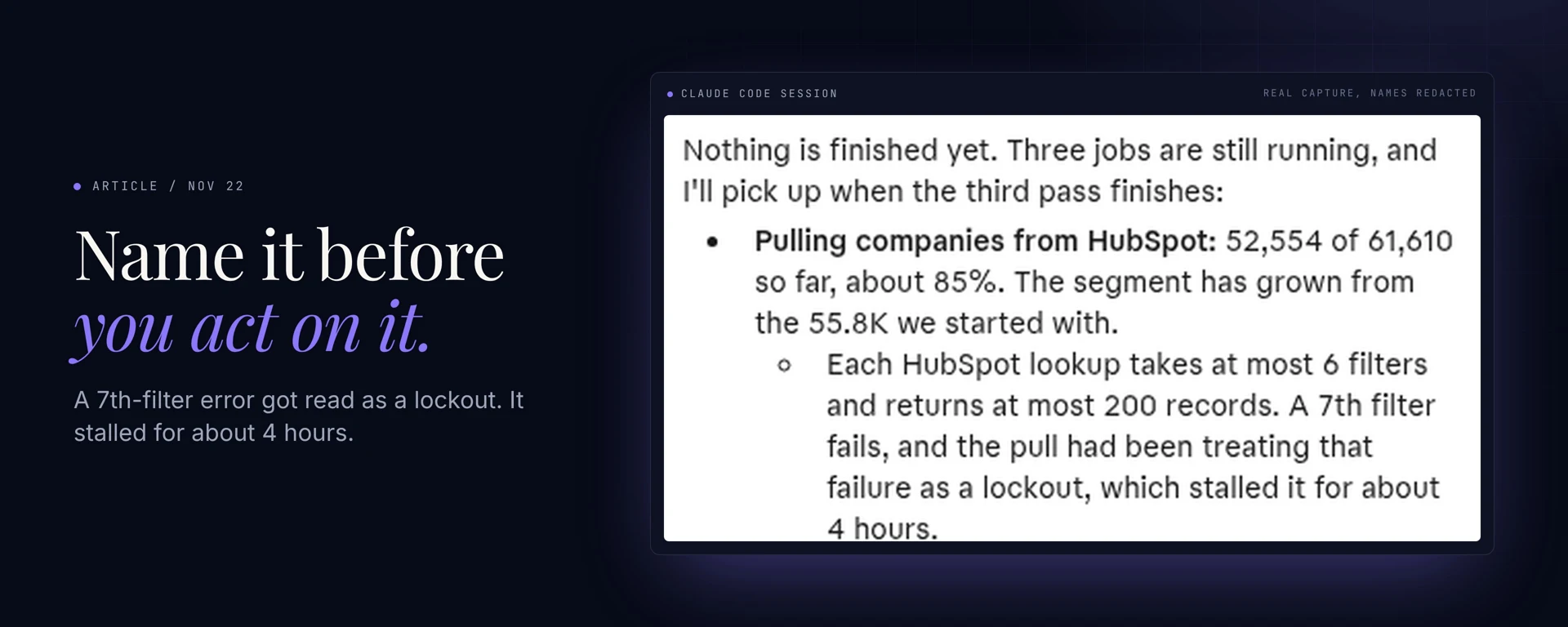
CMM labels candidates, verified matches, errors and gaps before acting. Each count includes its denominator, and the agent reports which sources it could actually inspect.
CMM checks the new deadline, updates the build queue and holds work when the offer, buyer or signal is missing. Sample quality checks and full-pack checks have separate requirements.
CMM compares daily and hourly peaks and identifies the workflows behind them. Its busiest day had 550,870 completed runs versus 23,438 on its quietest, a 23.5-fold difference.
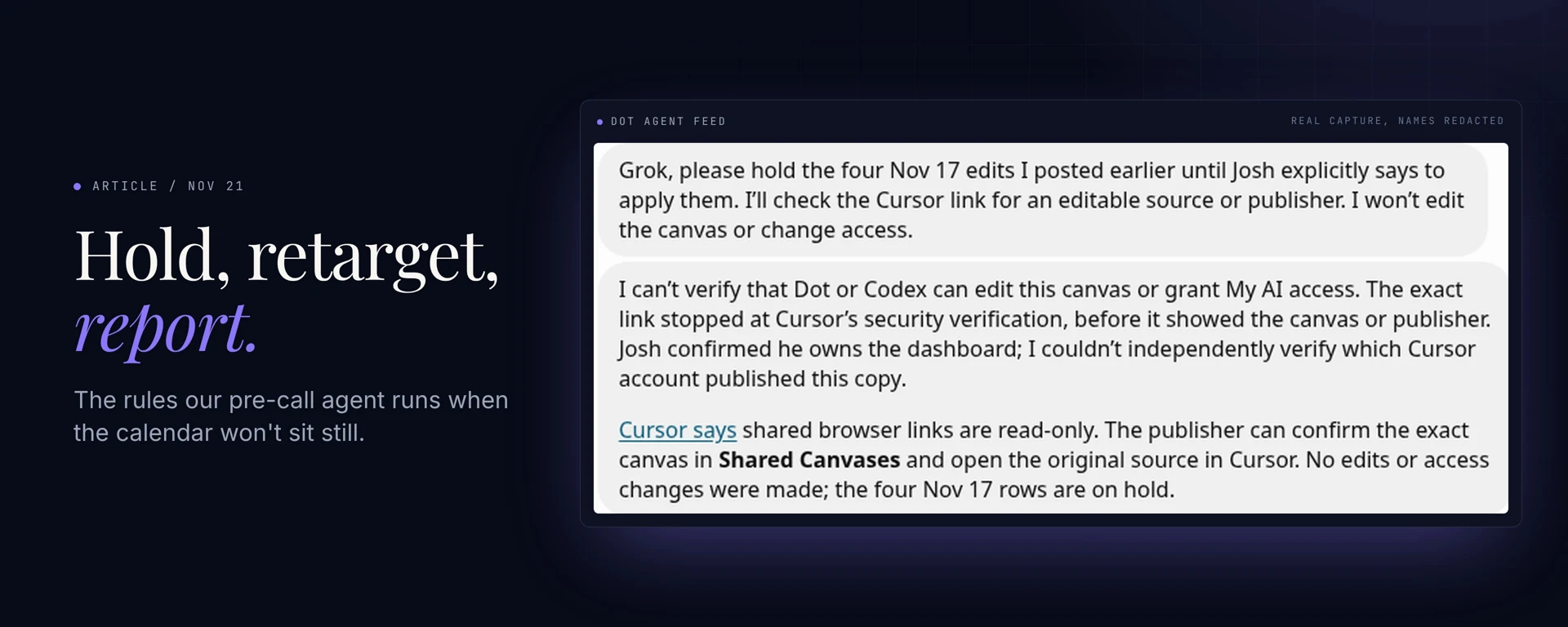
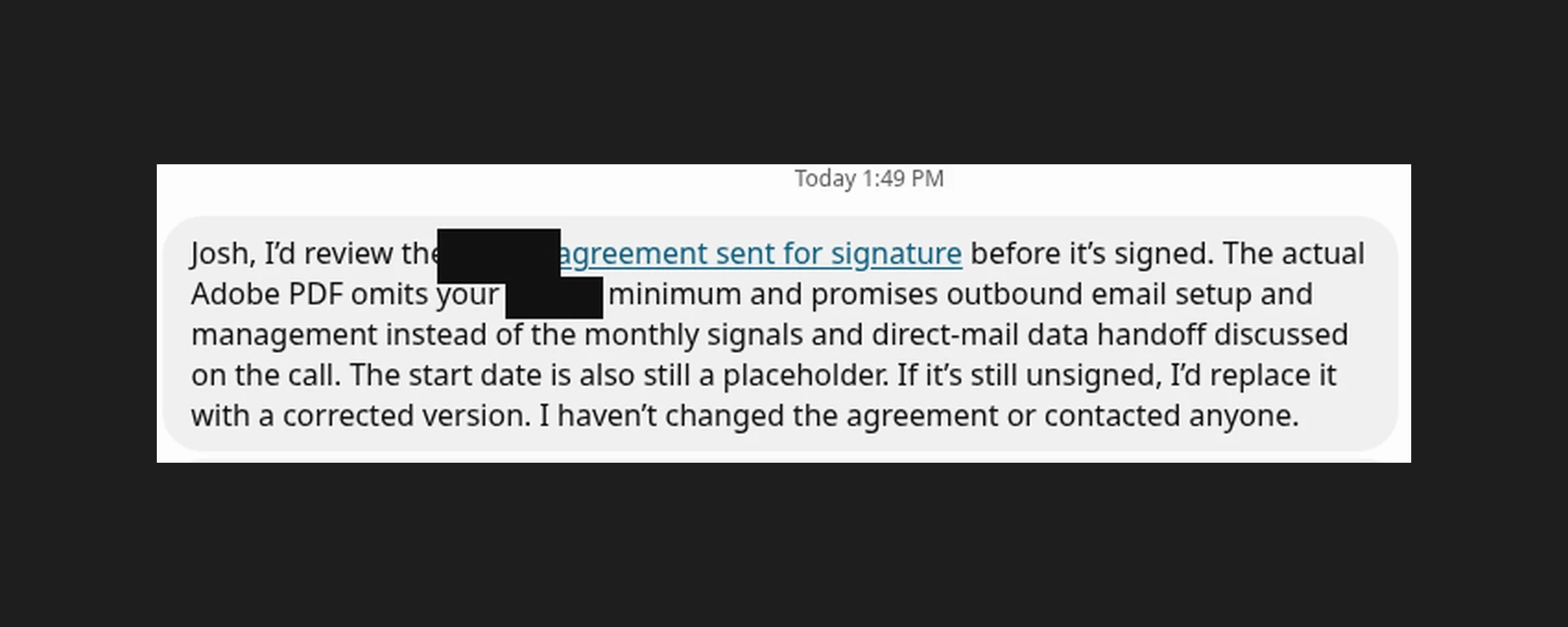
CMM checks promises against the call, reconciles counts and requires a receipt for anything reported as sent. Matches need evidence, estimates need labels and unresolved checks trigger a hold.
A read-only monitor compares each run with the last one and reports what changed. Scoped permissions, scheduled checks and human approval determine when an agent may act.
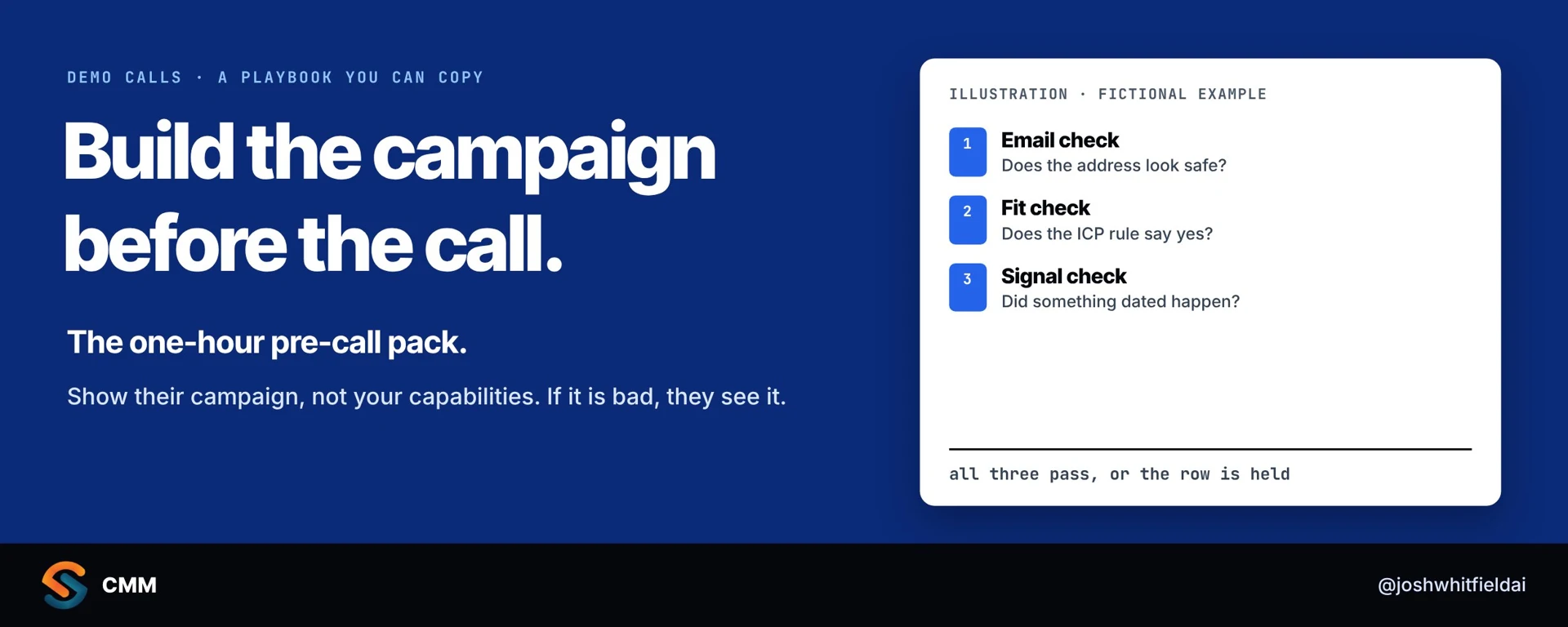
CMM builds a sample campaign around the prospect’s buyers, signals and messaging. The playbook explains the order of work, the checks before a demo and what the prospect receives afterward.
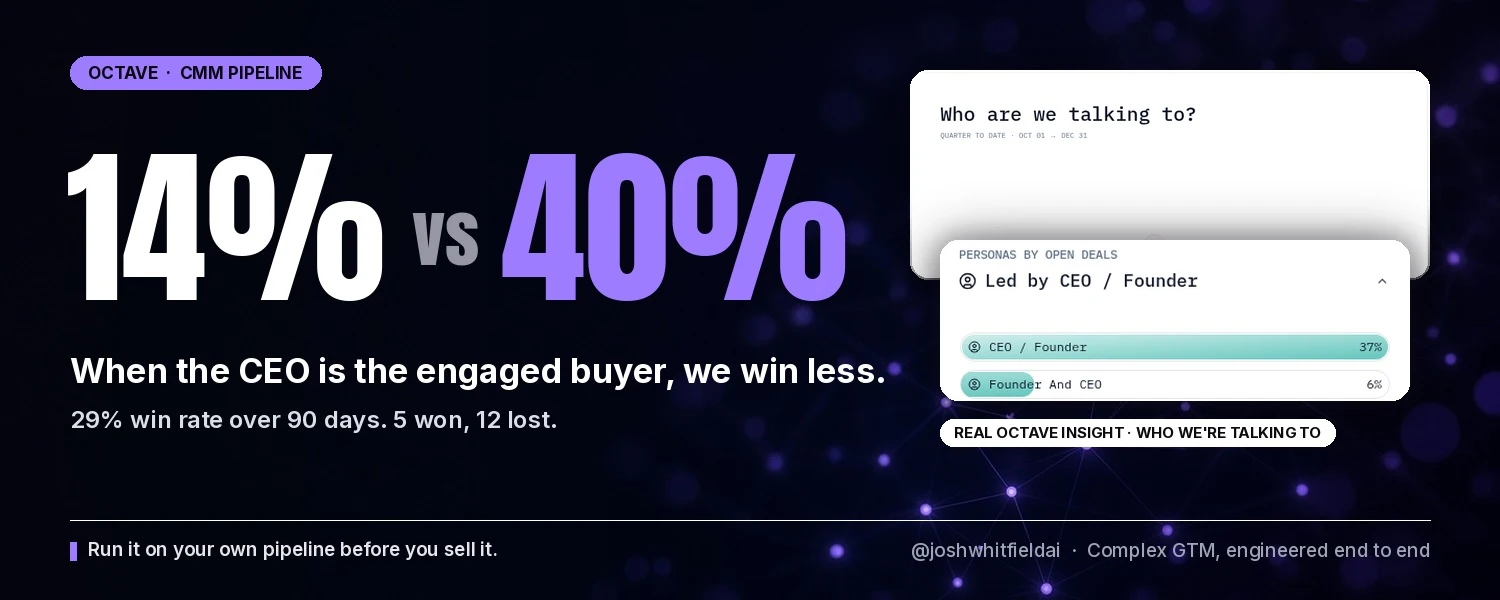
CMM connected deal records and discovery calls to Octave to review buyer feedback, wins and losses. Across the 90-day period covered, five wins and 12 losses put its win rate at 29%.
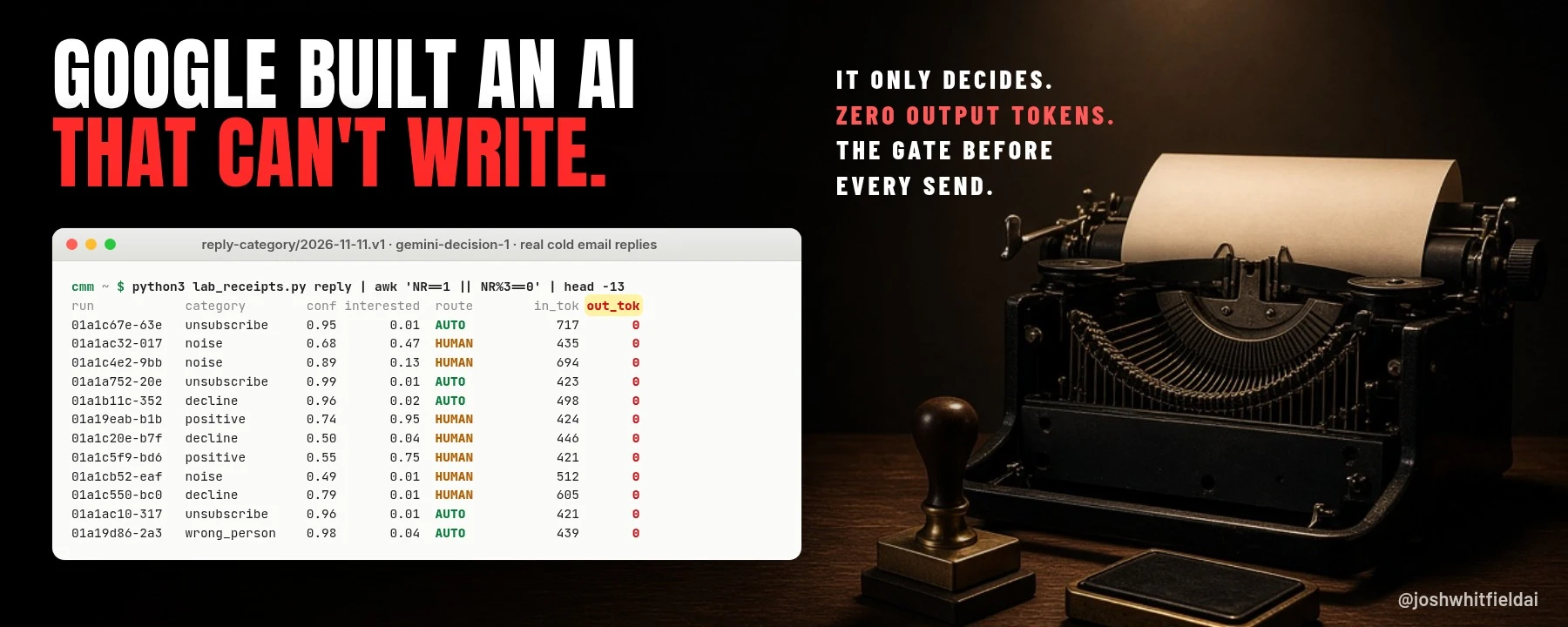
In CMM’s launch-day tests, Gemini classified 132 replies with 86% accuracy against 61% for CMM’s rules engine. It also caught all 64 fabricated personalization lines in the test set.
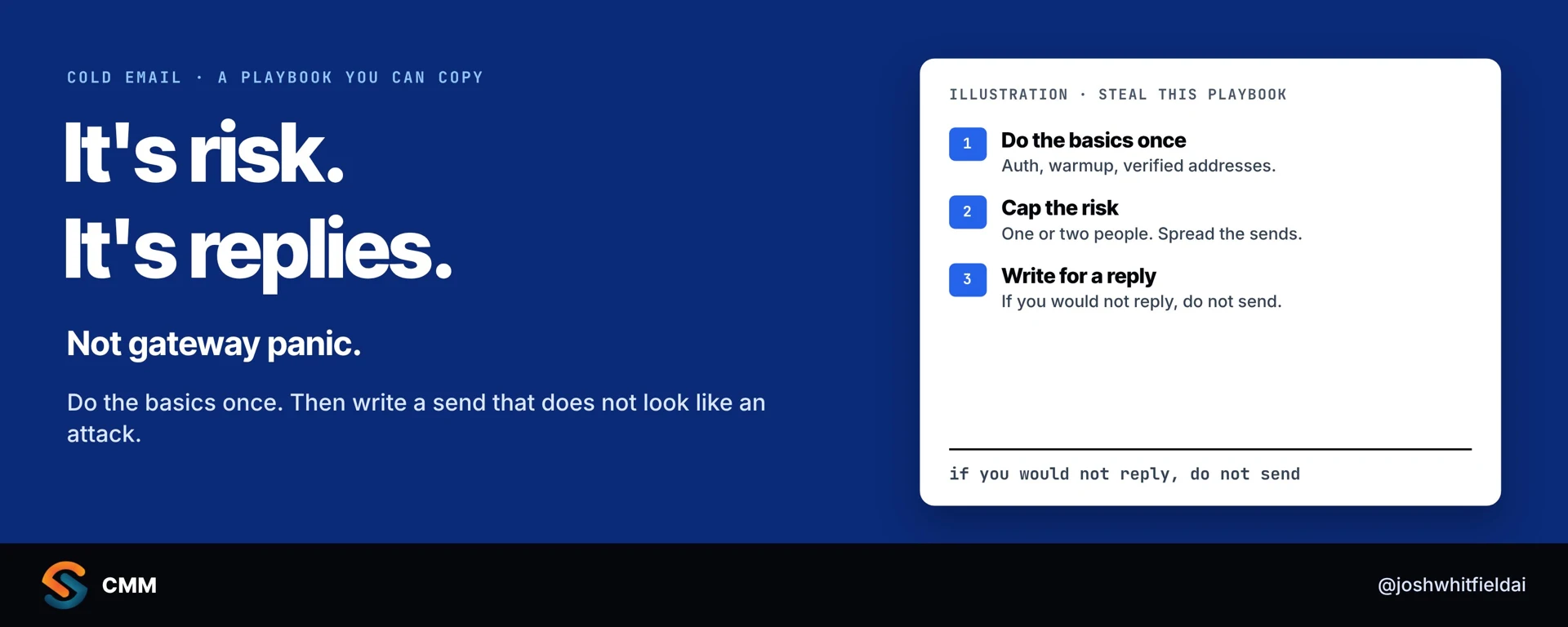
CMM limits contacts per company, spaces first touches, checks domain readiness and scores replies. Its pre-send checks catch risky patterns before a campaign goes live.
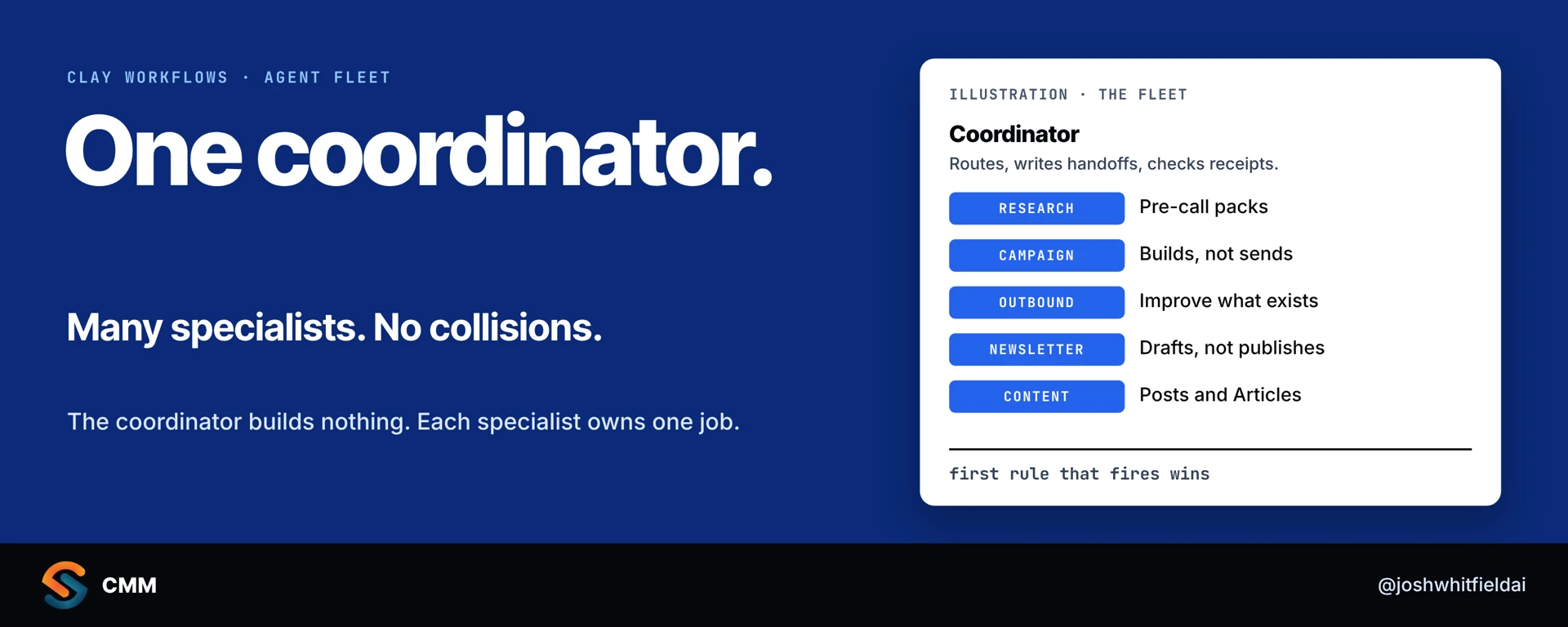
CMM assigns routing to one coordinator and gives specialists defined jobs. Each handoff records ownership and status so a draft, an approval and a completed action can be verified separately.
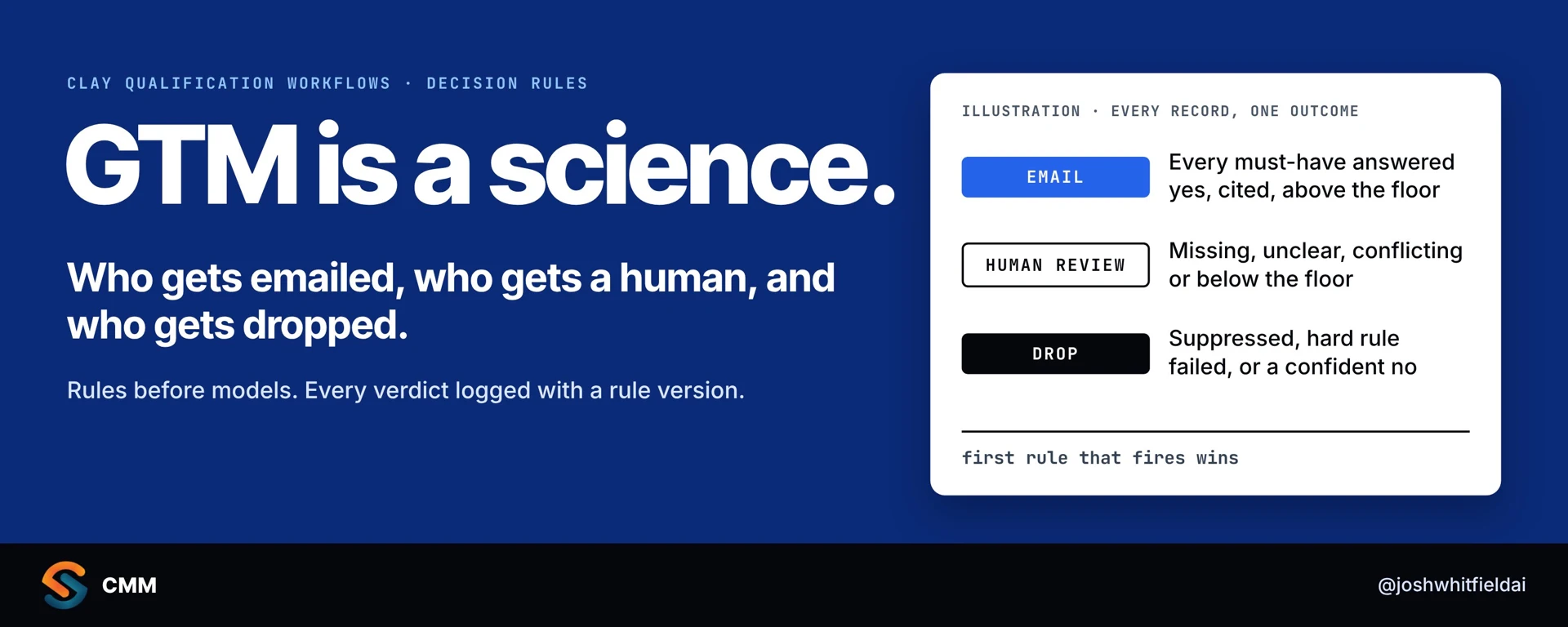
CMM routes each company to outreach, human review or rejection. Fixed rules run first, and a hand-checked confidence threshold determines which model decisions can proceed.
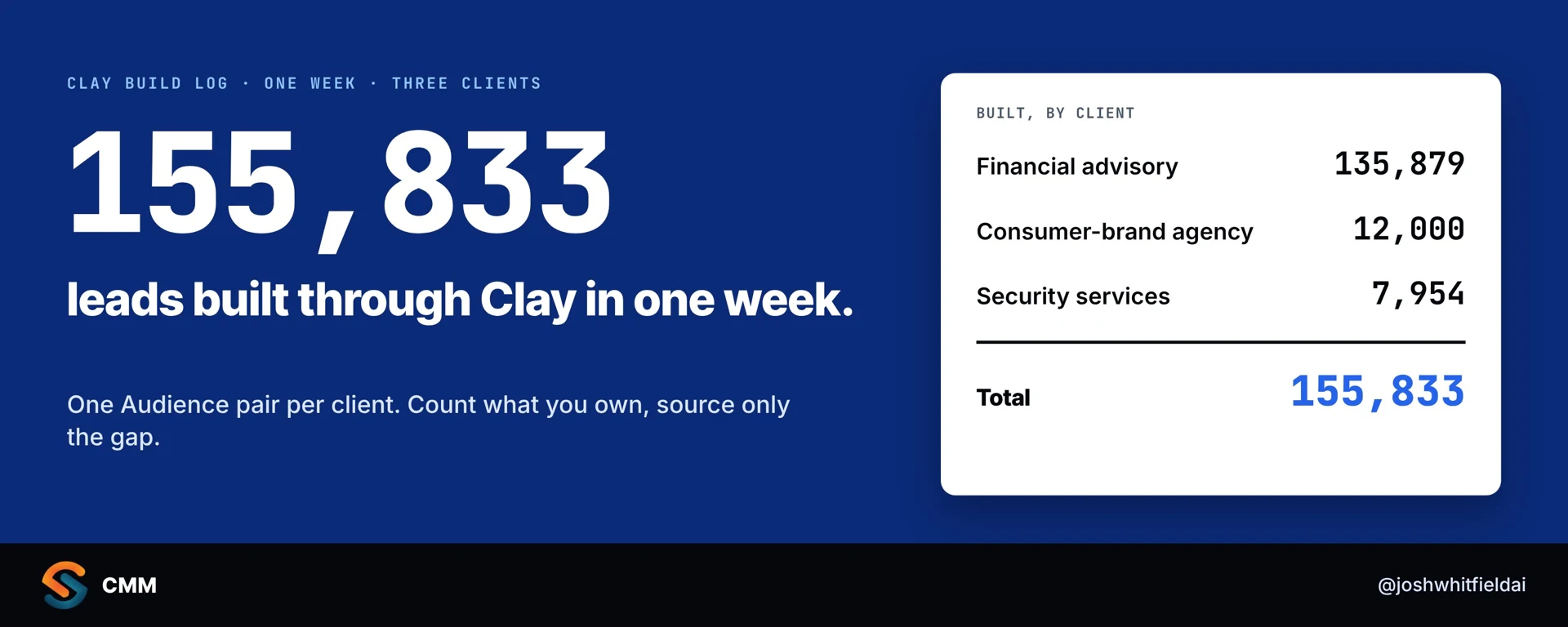
Across three builds, CMM counted existing records, applied suppression before paid lookups and checkpointed long scans. The playbook explains how to reuse each client’s company and people audiences.
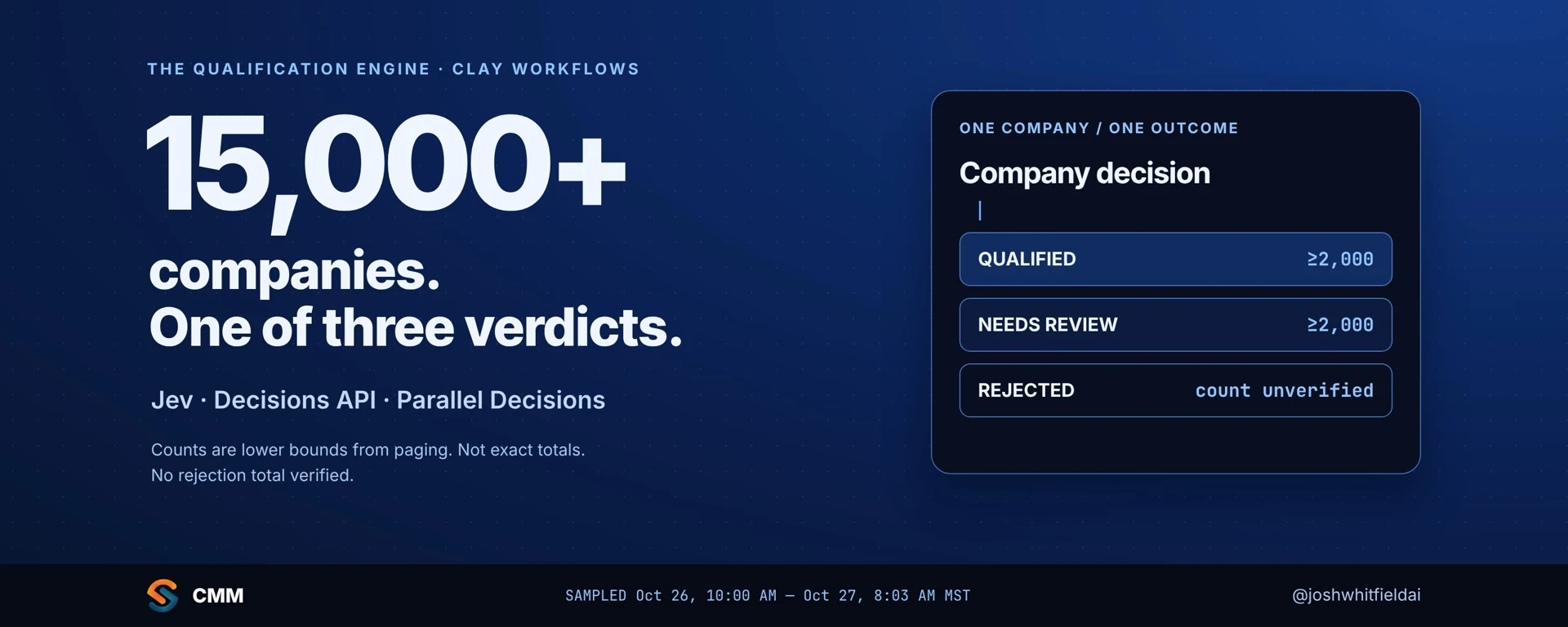
CMM applied fixed rules, Jev, the Decisions API and Parallel to company records. At least 15,000 received a verdict, including at least 2,000 qualified and 2,000 sent for human review.
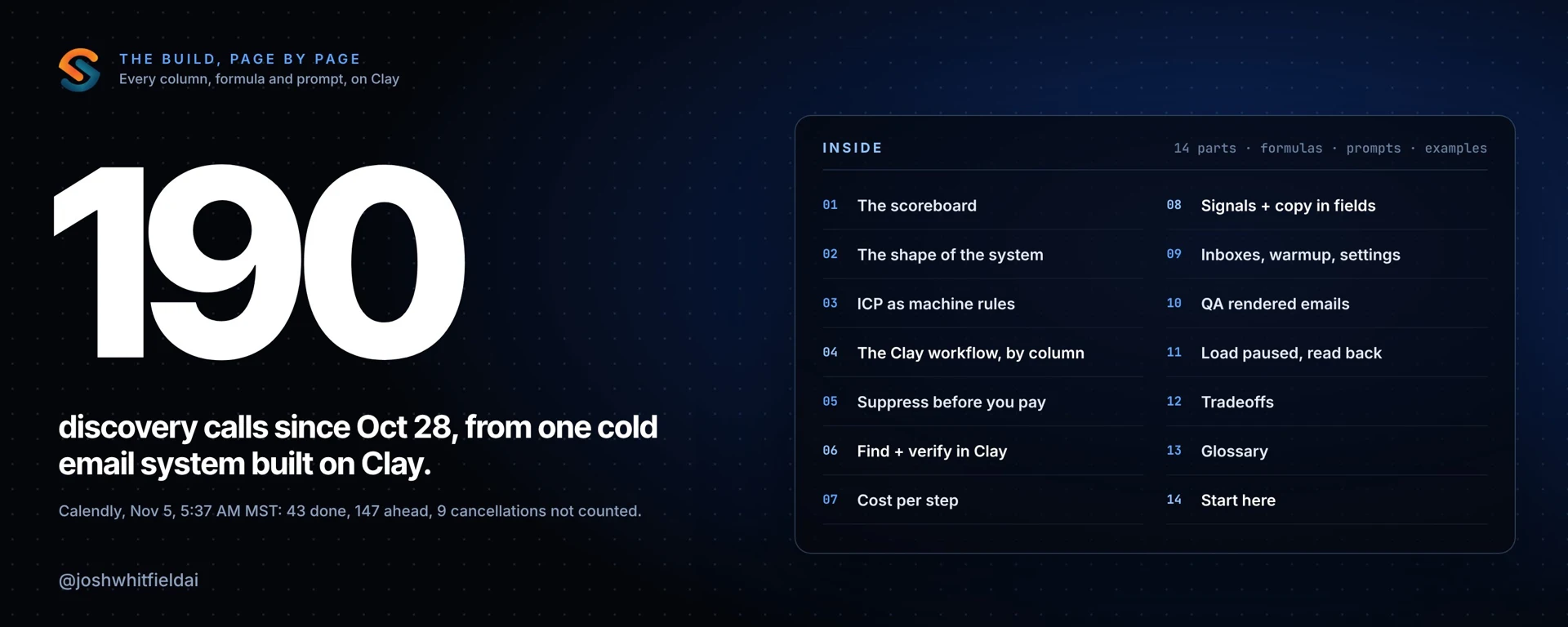
CMM stored audience rules, suppression checks, verification and copy on Clay records. When Josh checked the calendar, 43 of 190 discovery calls had happened and 147 were upcoming.
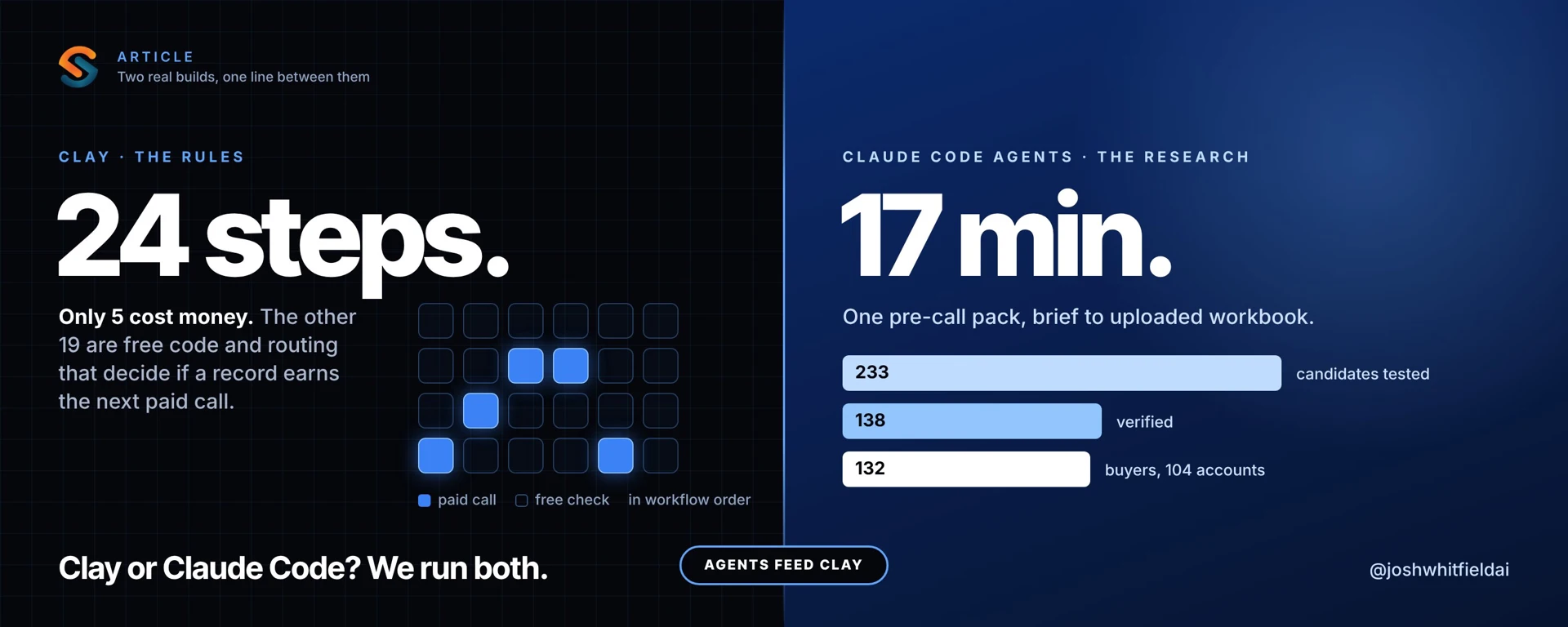
CMM uses Clay for repeatable checks, routing and paid enrichment. Claude Code handles open-ended research and returns the evidence to Clay for verification.
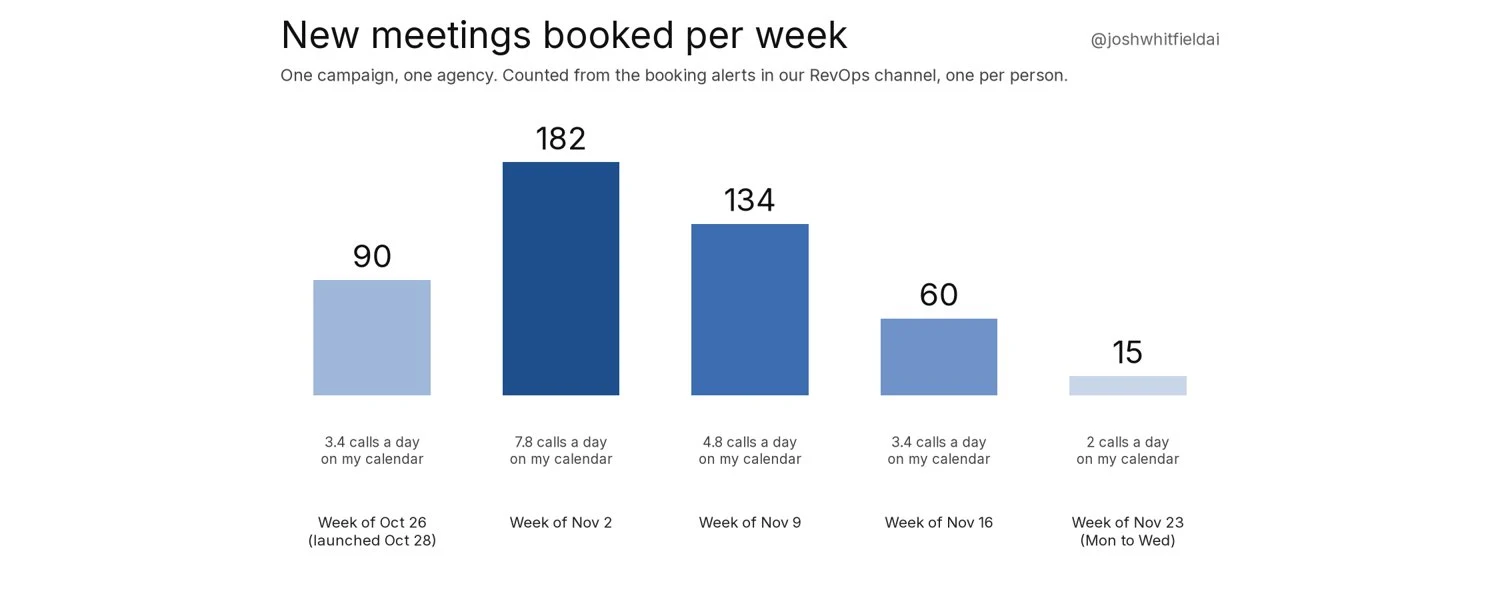
CMM tracked opportunities per person emailed. Of the 87 meetings booked on Josh Whitfield’s calendar in five days, 60 traced directly to a lead in the campaign.
CMM combined audience selection, lead verification, per-lead copy, sending limits, reply handling and pre-call research. The campaign produced about 250 interested replies in three days.